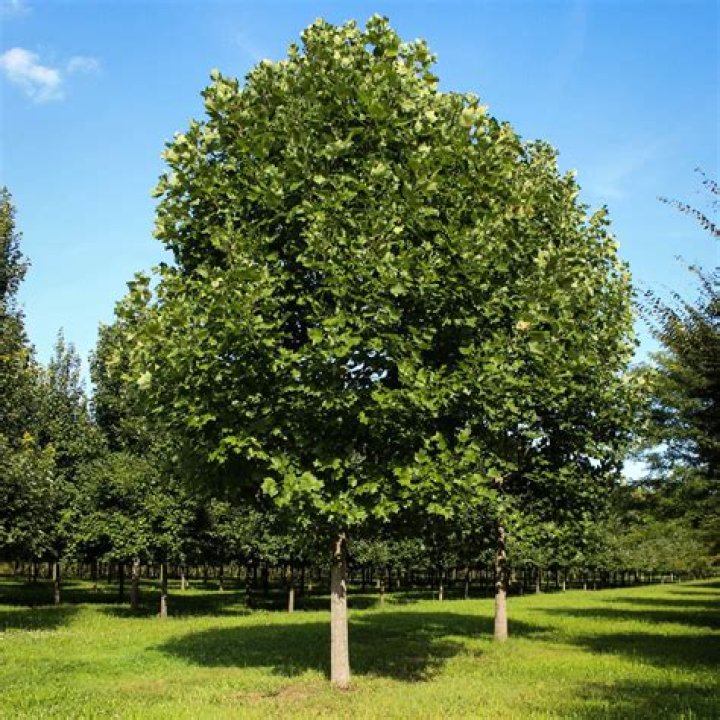
Herein, what is the use of mahogany?
Mahogany is a commercially important lumber prized for its beauty, durability, and color, and used for paneling and to make furniture, boats, musical instruments and other items.
Beside above, what is the scientific name for mahogany? Swietenia
Also know, why is mahogany illegal?
"American furniture makers are buying their mahogany from illegal sources because Peru is simply unable to control the logging. Peruvian timber companies are mixing legally and illegally logged wood for export; Gun-toting loggers are killing indigenous people trying to defend their land with bows and arrows.
Where is mahogany tree found?
With an extensive geographical range, big-leaf mahogany can be found throughout much of southern Mexico, Central America, and into South America (with southern limits in Brazil and Bolivia). Found within wet and dry tropical forests, it grows in a variety of soil types.
Is mahogany wood waterproof?
Mahogany is a fine-grained, durable wood. Mahogany stands up extremely well to water and is even used to make boats. It resists welling, shrinking and warping very well. Due to its ability to withstand wear and water, as well as its rich, natural reddish-brown color, it is an expensive option.Is Mahogany illegal?
Following the path of ivory, in 2003, mahogany was listed on the Convention on Trade in Endangered Species (CITES) as a species in need of strict regulation to prevent its extinction. Because Peruvian mahogany is traded in violation of CITES, it is illegal to trade or possess it under the U.S. Endangered Species Act.Why is mahogany used for furniture?
The wood of mahogany is one of the most outstanding materials for the manufacturing of fine furniture. Mahogany wood is valued because it is durable and can be carved with intricate details. It has a deep, rich color, attractive grain, stains beautifully, and glues solidly onto manufactured products.How many types of mahogany are there?
There are six main types of mahogany wood that you can choose from when you are thinking about getting new furniture.- African Mahogany. Get rid of nasty grime and smudges on your stainless steel.
- Mountain Mahogany.
- Santos Mahogany.
- Cuban Mahogany.
- Honduran Mahogany.
- Swamp Mahogany.
Is Mahogany cheap or expensive?
The most desirable species are very expensive—Cuban or West Indian mahogany is so rare that people pay as much up to $28 a board foot for it. By comparison, a furniture-grade hardwood like cherry runs about $3 a board foot.How can you tell mahogany?
Observe the pattern and grain. If the grain is fine and long, it might be mahogany, even if it might have a slight wave to it. Also, if you look close up and you see that there are many dark fine lines to the grain, that may be a good indication of mahogany, as well.Is mahogany wood expensive?
Unfinished solid mahogany lumber ranges from $6 to $28 per board foot, depending on the species, availability and quality. Mahogany decking and flooring material is slightly more expensive than furniture-grade boards, averaging between $7 and $9 per square foot, depending on quality.Is Mahogany a heavy wood?
It is actually one of the densest and hardest woods in the United States—the dried wood is heavy enough to sink in water. In the case of Swamp Mahogany, the wood is slightly more dense and difficult to work, and the dimensional stability is much worse.What is the most expensive wood?
World's Most Expensive Wood In The World- African Blackwood – $ 10,000 Per Kilogram. Source: Link.
- Agar Wood – $ 10,000 Per Kilogram. Source: Link.
- Ebony – $ 10,000 Per Kilogram. Source: Link.
- Sandalwood – $ 20,000 Per Kilogram.
- Pink Ivory – $ 7-8 Per Board Feet.
- Lignum Vitae – $ 5 Per Pound.
- Purple Heart – $ 11.99 Per Board Feet.
- Dalbergia – $ 14-16 Per Board Feet.